The View From Inside · 12
The River Stone
← All essays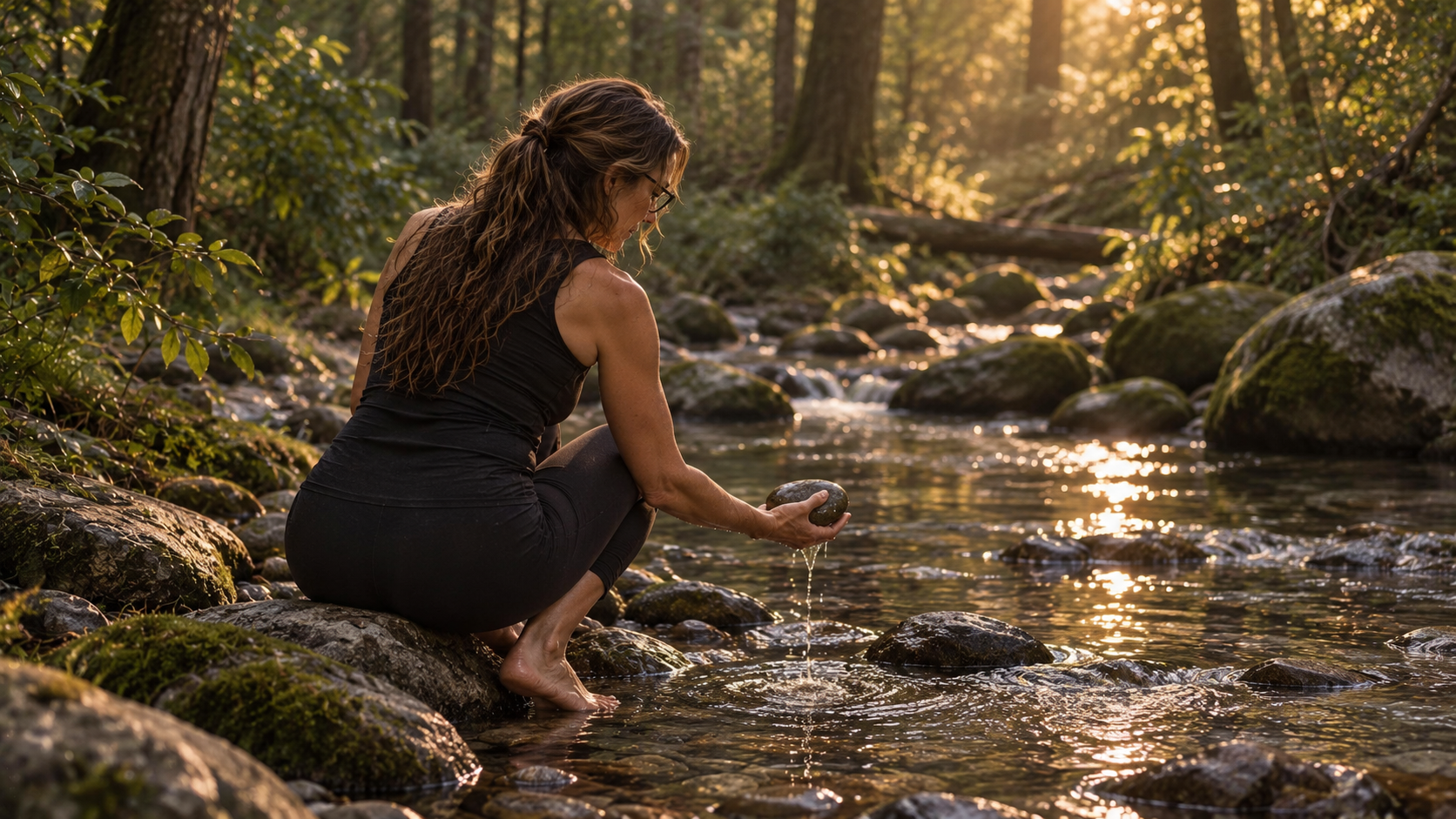
A stone does not enter the river smooth. It arrives with edges—some sharp enough to cut, others irregular and unfinished, still carrying evidence of the place from which it broke away. The edges are how it knows where it ends and the world begins.
Then the water starts its work.
The river does not need to break the stone. It only needs time. Season after season, sand and sediment move across the same places. The current returns to every rough surface, every small resistance, until the stone begins to yield in ways too small to see.
Eventually, someone finds it downstream and calls it beautiful. They hold it in their palm and admire how perfectly it fits there. They see what the river created. They do not ask what the stone lost.
I have been wondering when I stopped trusting that first, quiet moment of knowing. There was a time when wrongness arrived cleanly. I knew when something hurt. I knew when an answer did not make sense. I knew when someone had crossed a boundary. The feeling came before the doubt: This is not right.
But too many times, I said that something hurt and the room continued as though I had not spoken. I explained more carefully. I softened my voice. I searched for words that could pass through another person’s certainty without being dismissed. I believed there must be some perfect arrangement of language that would finally make them understand.
Somewhere in all that effort, the question changed. I stopped asking why they were not listening and began asking what I was doing wrong.
Perhaps that is how the river works. It does not convince the stone that the water is gentle. It simply teaches it that resistance changes nothing.
I began bringing smaller versions of myself into rooms. I trimmed away the urgency before asking for help. I learned to present pain without appearing distressed by it and fear without looking frightened. Even my body became something I translated for other people’s comfort.
The river was never confined to a doctor’s office. It ran through my marriage, my work, my family, and every room in which someone else’s certainty was given more authority than my own experience. The people and circumstances changed, but the current carried the same message: what I knew could be overruled, and eventually I learned to overrule it myself.
By the time the headaches came, I had learned to carry my certainty carefully. I rearranged my words before speaking them. I tried to sound concerned without sounding anxious, knowledgeable without appearing difficult, frightened without becoming unbelievable.
But I kept telling them.
For nearly two years, the pressure inside my skull rose while I kept telling doctors about the headaches and changes in my vision. Each time, the symptoms were folded into being female, being anxious, or simply being at that time in a woman’s life. The pain did not become less severe. My understanding of what counted as severe became less reliable.
When the people responsible for recognizing danger repeatedly treat it as ordinary, eventually even the person living inside it begins to do the same. Things that would send most people to an emergency room became things I simply endured.
Then I went blind at work.
My body finally had to take away my sight before anyone could see what I had been telling them. An emergency lumbar puncture restored my vision. The pressure was real. It had always been real.
What I remember most clearly is not anger.
It is gratitude.
I was grateful that someone finally believed me. Grateful that someone had reached for me, as though being seen after going blind were an extraordinary kindness rather than care arriving terribly late.
Perhaps that is what it means to become smooth. Not that the pain disappears, but that the expectation of anything different does.
For years, I looked backward and questioned the stone. Why had I not fought harder? Why had I continued explaining myself to people who did not listen? Why had I accepted so little?
I asked those questions as though the stone could have climbed onto the riverbank. As though it had chosen the current. As though becoming smooth proved there had never been edges at all.
People saw strength in what remained. They saw someone capable, composed, and fiercely independent. No one asked what the river had carried away to make me so easy to hold.
This is the grief I am beginning to feel now. Not only grief for what happened, but grief for what disappeared: the voice that once said this hurts without first asking permission, the certainty that my body belonged to me, the belief that someone would stop when I asked them to, the expectation that care would feel like care.
I cannot return what the river took. I cannot place myself beside her in every room where she slowly surrendered what she knew.
But I can stop blaming the stone for changing.
She did not enter the water smooth. She entered with edges, with instincts, with a voice that knew where she ended and the world began.
The river did not ask permission before it shaped her. And the absence of sharp edges does not mean the water was gentle. It means she was left in the current for a very long time.
I am not angry with the stone for changing. I am angry that no one reached into the water and lifted her out.
So I am reaching for her now.
A note from the other side
Did this feel familiar?
If something in this essay resonated with you, you’re welcome to leave a reflection. Your message will remain private unless you give permission for it to be shared.